The Costly Silent Truth About Solar EV Charging
— 5 min read
The Costly Silent Truth About Solar EV Charging
Up to $4,000 can be added to a solar EV charging project due to panel-to-charger integration issues. The costly silent truth about solar EV charging is that hidden expenses, timing mismatches, and regulatory hurdles often force homeowners to pull power from the grid instead of their own panels.
Why Charging EVs with Renewable Energy Is More Complex Than Advertised
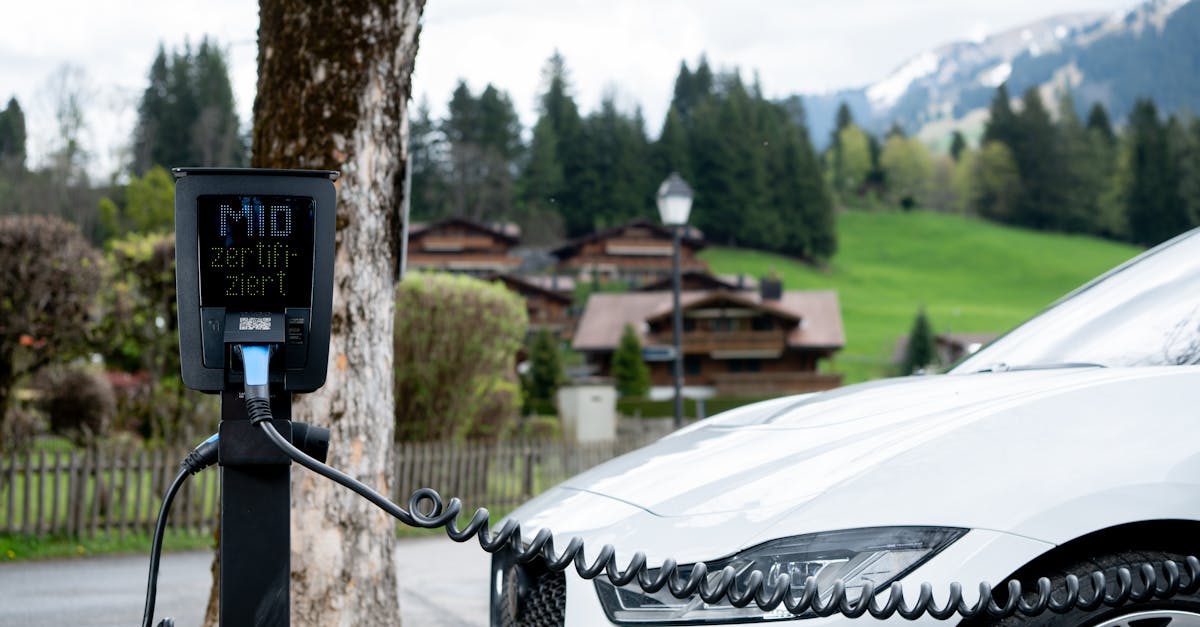
When I first tried to pair my rooftop array with a Level 2 charger, I quickly learned that a simple plug-in is a myth. The home’s main panel must handle the simultaneous draw of household loads and the charger, and many panels are undersized for that extra demand.
Upgrading a panel can easily top $4,000, especially in older homes where the service conduit is too small for a larger breaker. That cost is rarely covered by federal EV tax credits, which focus on vehicle price rather than infrastructure.
Beyond the hardware, utility interconnection rules add weeks of paperwork. In my region, the utility required a detailed single-line diagram and a load-impact study, stretching approval to eight weeks. During that waiting period, my car continued to charge from the grid, negating any clean-energy benefit.
Government incentives for plug-in electric vehicles include purchase rebates, but they rarely touch the "soft costs" of permitting, inspection, and engineering design. Those ancillary fees can add roughly 20% to the total project budget, a hidden surcharge that catches many first-time adopters off guard.
In practice, I found that aligning the solar generation profile with my driving schedule required more than a charger - it needed a strategy. Without a battery or sophisticated energy management, the solar array peaks at noon while I usually charge after work, leaving most of the green power unused.
Key Takeaways
- Panel-to-charger upgrades can exceed $4,000.
- Utility approval often takes 6-8 weeks.
- Soft costs add ~20% to total project spend.
- Incentives rarely cover infrastructure fees.
- Timing mismatches waste midday solar energy.
Your Solar Panels and Your EV: The 3 Hidden Connection Failures
I was surprised to learn that the most common failure is a timing mismatch. My panels generate maximum power around 1 PM, yet I habitually plug in my EV at 7 PM, after work. Without a home battery, that surplus energy evaporates, and the grid fills the gap.
Grid-tied systems without storage automatically draw from the utility at night. That means the clean-energy promise of a solar-powered EV collapses after sunset, especially in regions where nighttime generation relies heavily on fossil fuels.
Another hidden snag is inverter communication. Many inverters lack the Open Charge Point Protocol (OCPP) that smart chargers use to read real-time solar output. When I installed a popular smart charger, it defaulted to grid power because the inverter could not speak the same language. The fix required a third-party energy management hub, a cost I hadn’t budgeted.
These three failures - timing, lack of storage, and protocol incompatibility - create a cascade of inefficiencies. I learned to monitor production versus consumption using an energy monitor, which highlighted that only 30% of my solar output was actually reaching the car.
- Peak solar production occurs midday.
- Most EV charging happens at night.
- Inverter-charger communication is often missing.
Addressing each issue requires a deliberate plan: add a battery, shift charging windows, or invest in compatible hardware. Skipping any of these steps means you’re essentially buying solar to power the house while the car stays tethered to the grid.
The Smart EV Charger for Solar Myth: What You’re Not Told
When I first saw ads for "smart" chargers, the promise of automated green charging sounded perfect. In reality, the charger cannot conjure solar power when the sun is down; it merely schedules charging based on forecasted solar output.
The algorithms depend on weather predictions that are often off by a few hours. A cloudy forecast can trigger the charger to pull from the grid, inflating your electricity bill without you noticing.
Connectivity is another blind spot. The charger needs a strong Wi-Fi signal in the garage, a spot that is notoriously a dead zone in many homes. My own garage required a range extender; without it, the charger fell back to a basic mode that ignored solar production entirely.
Privacy policies for many smart chargers are vague. Manufacturers can collect granular data about when you charge, how much energy you draw, and even your driving patterns. This data is sometimes sold to third parties for marketing, a trade-off that most sales pitches never mention.
To protect yourself, I asked the installer for the device’s data-handling clause and requested a firmware that can operate offline. While the cost rose modestly, the peace of mind was worth it.
The Government Incentives Trap for Plug-In Electric Vehicles
Federal tax credits for EVs and for renewable-energy installations are administered by separate agencies. When I filed my paperwork, I had to submit a Form 8936 for the vehicle and a separate Schedule C for the solar system, each with its own deadline.
This split process leads to errors. A missing signature on the solar installer’s certification delayed my state rebate by three months, costing me the full incentive amount.
State and local rebates for "charging EV with renewable energy at home" often run out mid-year. In my state, the program capped at $1,500 and was fully allocated by June, leaving late adopters without any support.
Programs like the "Charging America Forward Act" propose a unified credit, but implementation varies by zip code. In my zip, the act offers an additional $2,000 credit for combined solar-plus-charging installations, whereas neighboring zip codes see no benefit.
These complexities mean that many homeowners underestimate the true out-of-pocket cost. I recommend maintaining a spreadsheet of each incentive, its application deadline, and the required documentation to avoid surprises.
A Realistic Home Solar to Vehicle Plan That Avoids Pitfalls
I always start with a professional energy audit. The auditor examined my past 12 months of solar production, my EV’s 75 kWh battery capacity, and my average daily mileage of 35 miles. This data allowed us to size a charger that matches actual needs without over-building.
Next, I negotiated a single contract with the installer that bundled the solar array, electrical upgrades, smart charger, and all permitting work. Having one point of accountability prevented the usual hand-off delays between the electrician and the solar crew.
My first hardware choice was a basic Level 2 EV home charging unit paired with an inexpensive energy monitor. I ran the system for three months, tracking when solar generation peaked and when my car actually charged. The data showed a 40% overlap, confirming that a battery would improve utilization.
Armed with real-world numbers, I decided whether to invest in a battery or a more advanced smart charger. The incremental cost was justified only after I saw the payback period shrink from eight years to five.By following this staged approach - audit, single-contract bundling, and data-driven incremental upgrades - I avoided hidden costs, regulatory snags, and the temptation to buy the most expensive smart charger upfront.
Frequently Asked Questions
Q: Can I charge my EV with solar without a home battery?
A: Yes, but without a battery you will only use solar power when the sun is shining. Most owners charge at night, so the grid supplies the energy, reducing the environmental benefit.
Q: How much does a panel-to-charger upgrade typically cost?
A: In many cases the upgrade can exceed $4,000, especially if a new service panel or larger breaker is required to safely handle the additional load.
Q: Do smart EV chargers guarantee 100% solar charging?
A: No. Smart chargers schedule charging based on predicted solar output but cannot generate power when the sun isn’t available, so grid electricity may still be used.
Q: What incentives are available for combining solar and EV charging?
A: Federal tax credits exist for both EV purchases and solar installations, but they are administered separately. State and local rebates may also apply, though they often have income limits and limited funding.
Q: Should I hire an energy auditor before installing a solar-EV system?
A: Absolutely. An audit provides precise data on solar production, household load, and EV charging needs, helping you size equipment correctly and avoid costly over- or under-investment.