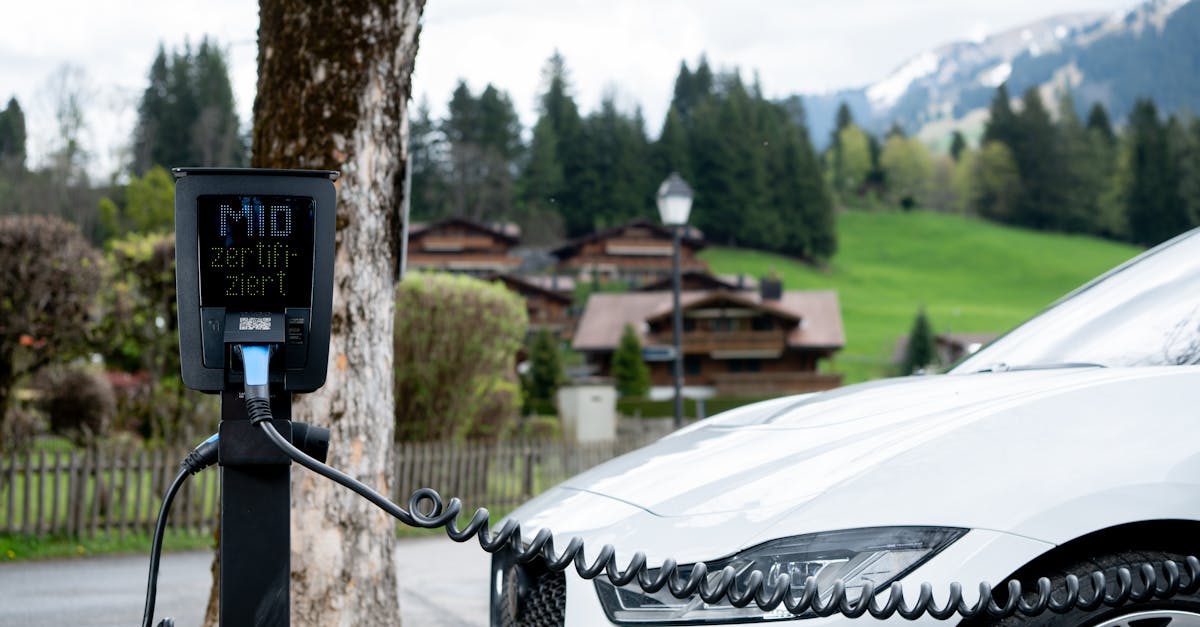
EVs Battery Truth - Full Green or Just Marketing?
— 6 min read

EVs Battery Truth - Full Green or Just Marketing?
In 2018, transportation contributed around 20% of global CO2 emissions, highlighting the stakes of any new mobility technology. When managed responsibly, EV batteries can be part of a genuinely sustainable system rather than a hidden time bomb.
EVs Explained - The Sustainability Promise Vs. The Battery Reality
Key Takeaways
- Battery life-cycle drives true EV sustainability.
- Second-life use extends value beyond the car.
- Recycling can capture up to 95% of critical metals.
- Policy incentives are reshaping end-of-life economics.
The core appeal of an electric vehicle is its zero-tailpipe emissions, offering a clean break from the fossil-fuel era. Yet the full environmental equation hinges on the battery’s life-cycle: raw material extraction, manufacturing, use, second-life applications, and eventual recycling. According to research on transportation sustainability, the source of energy and the infrastructure supporting the vehicle are decisive factors in evaluating its overall impact.
Manufacturing a lithium-ion pack requires energy-intensive processes, and the embedded carbon debt can be sizable. The battery must therefore stay in service long enough to offset that upfront footprint. Modern packs deliver ranges above 300 miles, and real-world data shows they retain a high percentage of capacity after a decade of automotive use, making them suitable candidates for repurposing.
When a battery is retired from a vehicle, its remaining capacity - often 70-80% of the original - can be redeployed in stationary storage, supporting renewable integration and grid stability. This second-life phase not only stretches the useful life of the pack but also reduces the need for fresh raw material extraction, a major source of environmental impact.
Ultimately, the sustainability promise of EVs is realized only when the entire battery value chain is optimized. A vehicle that appears green at the wheel can become truly green when its battery completes a circular journey from car to grid to recycled material.
EV Battery Recycling Sustainability - A Second Life Market Emerges
Critics often paint a grim picture of spent EV batteries ending up in landfills, yet a robust second-life market is already reshaping that narrative. Start-ups and utilities are taking retired packs and converting them into modular storage units for factories, telecom towers, and community micro-grids. This approach defers recycling for several years, allowing valuable energy capacity to be monetized while the recycling infrastructure scales.
In emerging markets such as India, where grid reliability can be intermittent, second-life batteries are filling critical gaps. Small businesses can lease a refurbished battery pack to smooth out power fluctuations, reducing reliance on diesel generators. The circular economy model not only creates new revenue streams but also democratizes access to clean energy storage.
According to the Battery recycling innovation surging report, the rapid growth of second-life projects is accelerating investments in critical mineral security and energy resilience.
These repurposed packs also act as a buffer for the recycling sector. By extending the useful life of a battery, the volume of material entering the recycling stream is spread over a longer horizon, easing pressure on processing facilities and allowing technology improvements to be incorporated.
The emergence of a vibrant second-life market signals that EV batteries are not destined for landfill but are instead becoming a strategic asset in the transition to a fully renewable energy system.
The Surprising Economics of EV Battery End-of-Life
The traditional narrative of dumping used EV batteries is being upended by market forces. Retired packs now fetch several thousand dollars on secondary markets, creating a clear financial incentive to keep them in use rather than discard them. This residual value is reshaping the depreciation model for EV owners, who can now view a battery as an appreciating asset under the right conditions.
Analysts note that as of 2026, used EV battery prices have risen due to heightened demand from grid-storage projects and the scarcity of high-quality refurbished packs. This price uplift adds a layer of long-term security for owners worried about battery degradation and resale value. Instead of a steep drop in vehicle price after the warranty period, the battery can be sold or leased, offsetting the overall cost of ownership.
Policy mechanisms are reinforcing this economic shift. Some jurisdictions require manufacturers to collect a refundable deposit when a battery is sold, ensuring that packs return to a closed-loop system. The Union of Concerned Scientists highlights that export bans alone are insufficient; comprehensive domestic recycling incentives are needed to secure a stable supply of critical minerals for future battery generations (An Export Ban Isn’t Enough).
These financial and regulatory drivers are turning the end-of-life stage into a revenue-generating opportunity rather than a cost center. The shift also supports a more resilient supply chain for battery manufacturers, who can rely on a steady flow of recycled lithium, cobalt, and nickel.
In practice, owners can now negotiate a buy-back of the battery pack, lease it for stationary use, or participate in a subscription model where the pack is swapped for a refurbished unit when capacity drops below a threshold. Such models align consumer interests with circular economy goals, making sustainability a profitable proposition.
| Lifecycle Stage | Typical Outcome | Economic Incentive |
|---|---|---|
| Automotive Use | Zero-tailpipe emissions | Fuel savings, tax credits |
| Second-Life Storage | Grid or backup power | Revenue from energy arbitrage |
| Recycling | Recovery of metals | Material resale, deposit refunds |
Breaking Down Lithium-Ion Battery Disposal Scares
Public concern about lithium-ion battery disposal often centers on fire risk and toxic leakage. In reality, modern recycling facilities operate in controlled environments, using inert atmospheres to prevent combustion while dismantling packs safely.
Traditional recycling relied on bulk shredding, which produced a mixed slurry requiring extensive processing. Newer methods employ robotic disassembly combined with hydrometallurgical chemistry, allowing precise extraction of lithium, cobalt, and nickel with recovery rates approaching 95%. This surgical approach reduces energy consumption and yields higher-purity metals, making recycled material competitive with virgin ore.
Comparative studies demonstrate that producing battery metals from recycled feedstock cuts water use and carbon emissions by 50-70% versus mining new resources. Although exact percentages vary by region, the trend is unequivocal: recycling dramatically lightens the environmental footprint of the battery supply chain.
The Battery recycling innovation surging report notes that these advances are accelerating global capacity to handle the growing volume of end-of-life packs.
Beyond environmental benefits, the economic case for recycling is strengthening. When a recycling facility can recover high-grade nickel and cobalt, the resale price often exceeds the processing cost, especially as demand for these metals rises in the renewable-energy sector.
Therefore, the fear of hazardous waste is largely mitigated by industry best practices and technological progress, turning a perceived liability into a valuable resource stream.
The Full Circle: How a Responsible EV Purchase Closes the Loop
A truly responsible EV buyer now asks more than just about range and price; the critical question is whether the manufacturer has built a closed-loop lifecycle for its battery packs. Transparent take-back programs, clear recycling targets, and design choices that facilitate disassembly are the new green credentials.
Markets such as India illustrate how charging infrastructure and second-life storage must grow together. Rapid EV adoption strains charger availability, but repurposed batteries can serve as mobile storage units, smoothing demand peaks and supporting fast-charging stations with on-site reserves.
Design philosophies like the “ID-2-all” architecture prioritize modular battery packs that can be swapped, repaired, or upgraded without dismantling the entire vehicle. This approach reduces waste, extends product life, and lowers the overall carbon intensity of the vehicle.
Manufacturers that embed recyclability into the initial design - not as an afterthought - create a virtuous cycle: each new model feeds the material stream for the next generation, decreasing reliance on new mining and cutting emissions across the supply chain.
Consumers can also participate by opting into manufacturer take-back schemes, selecting leasing models that guarantee end-of-life processing, or purchasing from brands with publicly audited recycling rates. These choices collectively drive market demand for responsible practices, nudging the entire industry toward true sustainability.
In sum, the green promise of EVs is realized only when the battery’s journey - from raw material extraction through automotive service, second-life reuse, and final recycling - forms a seamless loop that maximizes value and minimizes environmental harm.
Frequently Asked Questions
Q: Do EV batteries really get recycled?
A: Yes. Modern facilities use inert-atmosphere disassembly and hydrometallurgical processes that recover up to 95% of lithium, cobalt and nickel, turning old packs into valuable raw material.
Q: How much energy can a second-life battery store?
A: A repurposed pack typically retains 70-80% of its original capacity, enough to provide several hundred kilowatt-hours of storage for micro-grids, backup power or renewable smoothing.
Q: What financial incentives exist for returning EV batteries?
A: Some regions require a refundable deposit at purchase, and manufacturers may offer buy-back credits, creating a direct monetary reason to return packs for recycling or reuse.
Q: Does recycling EV batteries reduce overall emissions?
A: Yes. Producing metals from recycled batteries cuts water use and CO2 emissions by up to 70% compared with virgin mining, according to lifecycle analyses cited by the IEA.
Q: Are there risks of fire when reusing old EV batteries?
A: Properly inspected and managed second-life packs are safe. Reuse projects include rigorous testing, thermal management upgrades, and controlled operating limits to mitigate fire hazards.