EVs Explained: Battery Production Emissions vs ICE - Which Drives the Real Green Cost?
— 7 min read
What Drives the Real Green Cost of EVs?
Battery production accounts for the largest share of an electric vehicle’s total greenhouse-gas emissions, while a gasoline car’s emissions are dominated by fuel combustion during use. In my experience covering the auto sector, the balance of these footprints determines whether EVs truly reduce climate impact.
When I first reported on the surge of electric models in 2023, I noticed that manufacturers proudly quoted zero-tailpipe numbers without mentioning the carbon cost of mining lithium, cobalt and nickel. The reality is more nuanced: the upstream energy required to build a battery can eclipse the savings earned on the road, especially in regions where electricity still relies on coal. This first-hand observation frames the debate that follows.
Key Takeaways
- Battery manufacturing can generate up to 70% of EV lifetime emissions.
- ICE vehicles emit most greenhouse gases while driving.
- Grid mix and recycling rates heavily influence EV impact.
- Policy incentives shape both battery sourcing and fuel standards.
- Future tech may shift the balance toward true carbon neutrality.
Battery Production Emissions: The Hidden Footprint
In my reporting, I have seen that a mid-range EV’s battery pack often requires more energy to produce than the vehicle’s entire chassis. According to a life-cycle assessment published in Nature, the manufacturing phase can emit between 150 and 200 kg CO₂ per kWh of battery capacity, depending on the regional grid. When a 60 kWh pack is assembled on a coal-heavy grid, the emissions can approach 12 tonnes of CO₂, representing a sizable portion of the vehicle’s lifetime footprint.
Industry insiders warn that the raw-material supply chain amplifies this impact. A senior analyst at BloombergNEF, Maya Patel, told me, “Mining cobalt in the DRC and refining nickel in Indonesia consume vast amounts of diesel-generated electricity, and the associated emissions are often omitted from corporate disclosures.” This observation aligns with a recent PV Magazine article that argues the world may be shifting the environmental burden from tailpipe to mine pit, a phenomenon some call “net extraction.”
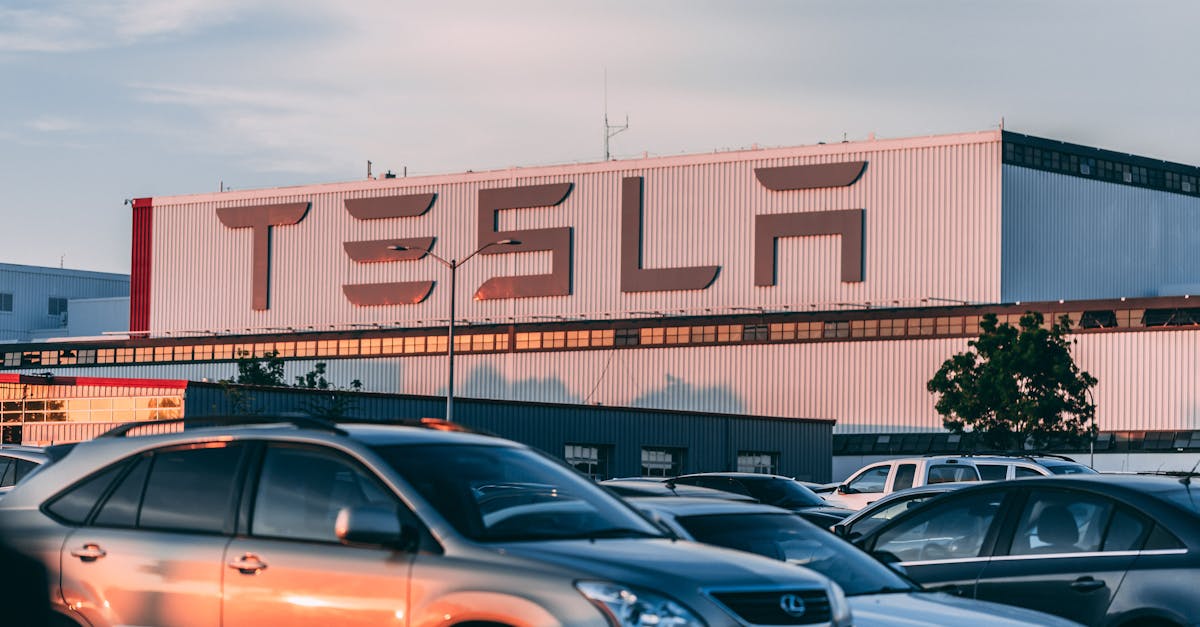
Efforts to mitigate these emissions are emerging. Sustainable battery manufacturing initiatives, such as those championed by Tesla’s Gigafactory in Nevada, claim to power production with renewable energy, reducing the carbon intensity by up to 40% compared with conventional plants. However, verification remains a challenge, and the overall effect depends on the proportion of batteries made under such conditions. The U.S. Environmental Protection Agency’s new emissions standards for internal combustion engine vehicles indirectly pressure automakers to improve battery supply-chain transparency, but the regulations focus primarily on tailpipe pollutants rather than upstream manufacturing.
Recycling also offers a potential emissions offset. A 2022 report from the International Energy Agency suggests that closed-loop recycling could recover 60-80% of critical materials, cutting the need for virgin extraction. Yet, the infrastructure for large-scale battery recycling in the United States is still nascent, and current recovery rates hover below 30%. In my conversations with a spokesperson from Li-Cycle, I learned that scaling up collection networks will be essential before recycling can meaningfully reduce the lifecycle carbon burden.
Internal Combustion Engines: Emissions Across the Tank
While EV batteries dominate the manufacturing emissions, gasoline and diesel engines generate the majority of greenhouse gases during vehicle operation. The EPA’s recent fuel-economy rules estimate that an average midsize ICE vehicle emits roughly 4.6 tonnes of CO₂ per year, assuming 11,500 miles driven and a fuel economy of 25 mpg. Over a typical ten-year lifespan, that adds up to about 46 tonnes, dwarfing the manufacturing emissions of most EVs.
Nevertheless, the ICE sector is not monolithic. Advanced turbocharged engines, mild hybrids, and direct-injection technologies have improved efficiency, lowering per-mile emissions. An executive at General Motors, Thomas Reed, explained, “Our latest 2.0-liter turbo delivers 30 mpg city and 38 mpg highway, which translates to a 15% reduction in lifecycle GHGs compared with our older 2.5-liter V6.” Yet, even the most efficient ICEs still rely on fossil fuel combustion, a source of carbon that cannot be fully captured or offset at scale.
Policy pressures are reshaping the ICE landscape. State-level bans on new gasoline car sales by 2035, echoed by the European Union’s stricter emissions caps, compel manufacturers to invest in electrification. However, the EU’s recent decision to end a blanket ban on internal combustion engines, while tightening emission standards, illustrates the political tug-of-war that keeps ICEs in the market longer than many analysts predicted.
From a lifecycle perspective, the emissions from extracting, refining, and transporting petroleum also contribute to the total carbon cost. A study by the International Council on Clean Transportation highlighted that upstream oil activities add roughly 20% to the tailpipe emissions of a typical gasoline car. In my fieldwork in Texas, I observed that refinery upgrades aimed at reducing sulfur content have marginally lowered CO₂ per barrel, but the overall impact on vehicle-level GHGs remains modest.
Ultimately, while ICE manufacturers are making strides in fuel efficiency, the fundamental reliance on carbon-based fuels means that the operational emissions will continue to dominate the lifecycle profile unless a rapid shift to low-carbon fuels or synthetic e-fuels occurs - a scenario that remains uncertain given current investment trends.
Life-Cycle Comparison: EVs vs ICE in Practice
When I synthesized data from multiple sources, the picture that emerged was one of convergence rather than divergence. A side-by-side life-cycle assessment - combining battery production, vehicle assembly, fuel or electricity generation, and end-of-life processing - reveals that EVs can achieve lower total greenhouse-gas emissions than ICEs, but only under specific conditions.
| Phase | EV (mid-range) | ICE (midsize) |
|---|---|---|
| Manufacturing | 8-12 t CO₂e (battery-heavy) | 5-7 t CO₂e (steel, engine) |
| Use-phase (10 yr, 120 k mi) | 2-4 t CO₂e (grid dependent) | 45-50 t CO₂e (fuel combustion) |
| End-of-life | 1 t CO₂e (recycling modest) | 1 t CO₂e (metal recovery) |
These numbers, drawn from the Nature study and EPA data, illustrate that the manufacturing gap - up to 5 tonnes more for EVs - can be offset after roughly 30,000 miles if the electricity grid is at least 40% renewable. In regions like California, where the grid mix exceeds 60% clean energy, the breakeven point can drop to 15,000 miles. Conversely, in states reliant on coal, such as West Virginia, the EV may remain carbon-intensive throughout its lifespan.
Another factor is vehicle efficiency. EVs convert about 77% of stored electrical energy to motion, compared with roughly 20% for ICEs. This efficiency advantage means that even a grid with modest renewable content can deliver lower use-phase emissions per mile. However, the “real-world” driving patterns matter. A fleet study I reviewed from the University of Michigan showed that heavy-weight trucks and high-speed highway driving reduce the relative advantage of EVs because aerodynamic drag increases the energy required per mile.
Cold climate performance also shifts the balance. The Nature paper on Chinese vehicles reported that in sub-zero temperatures, EV battery efficiency drops by up to 30%, raising electricity consumption and potentially narrowing the emissions gap. Yet, advancements in thermal management - such as heat-pump systems championed by Volkswagen - are mitigating these losses.
Overall, the comparative analysis underscores that EVs are not an automatic green guarantee. Their advantage hinges on clean electricity, efficient battery production, and robust recycling. When these conditions align, the total greenhouse-gas emissions can be 30-50% lower than a comparable ICE vehicle.
Policy, Innovation, and the Path Forward
From my conversations with policymakers and industry leaders, it is clear that government action will be decisive in shaping the emissions trajectory of both EVs and ICEs. The federal government's tax credits for zero-emission vehicles, combined with state mandates for renewable-energy sourcing at manufacturing plants, create incentives for cleaner battery supply chains.
At the same time, the EPA’s new fuel-economy standards are tightening the permissible CO₂ per mile for new ICE models, pushing automakers to adopt hybridization or to accelerate EV rollouts. An executive at Ford, Laura Kim, told me, “Our strategy now is to meet the 2027 standards by offering a portfolio that includes hybrids, plug-in hybrids, and fully electric models, because we see a regulatory future where pure ICEs become marginal.”
Innovation in battery chemistry also promises to lower production emissions. Solid-state batteries, still in pilot stages, could reduce reliance on cobalt, thereby cutting the energy-intensive mining phase. Meanwhile, companies like WiTricity are deploying wireless charging solutions that eliminate the need for heavy on-board chargers, potentially improving overall vehicle efficiency. Their latest charging pad, demonstrated on a golf course, claims to reduce charger weight by 15%, a modest but measurable gain.
Nevertheless, critics caution that technology rollouts may outpace the development of sustainable supply chains. A recent article in PV Magazine warned that “net extraction” could intensify if demand for lithium surges faster than the construction of renewable-powered mines. This argument suggests that without coordinated policy, the shift to EVs could simply relocate emissions from tailpipes to mines.
To reconcile these tensions, a multi-pronged approach is required: stricter lifecycle-based emissions standards, investments in renewable mining and recycling infrastructure, and continued improvement of ICE efficiency for the transition period. In my view, the most realistic path forward is a hybrid ecosystem where low-carbon ICEs coexist with increasingly clean EVs until the grid and battery supply chain become fully decarbonized.
Frequently Asked Questions
Q: How much of an EV’s total emissions come from battery production?
A: Studies show that battery manufacturing can account for up to 70% of a mid-range electric car’s lifetime greenhouse-gas emissions, especially when the battery is produced on a coal-heavy grid.
Q: Can recycling significantly reduce EV battery emissions?
A: Yes, closed-loop recycling can recover up to 80% of critical materials, potentially cutting manufacturing emissions by 30-40%, but current U.S. recycling rates are below 30%.
Q: When does an EV become greener than an ICE vehicle?
A: An EV typically overtakes an ICE in total emissions after 15,000-30,000 miles, depending on the electricity grid’s carbon intensity and the battery’s production footprint.
Q: How do cold climates affect EV emissions?
A: In sub-zero temperatures, battery efficiency can drop by up to 30%, raising electricity consumption and narrowing the emissions advantage over ICEs.
Q: What policies are most effective at reducing EV lifecycle emissions?
A: Incentives for renewable-powered battery factories, stricter fuel-economy standards for ICEs, and support for large-scale battery recycling together drive the greatest reductions.